Average Reviews:

(More customer reviews)Are you looking to buy On Some Faraway Beach: The Life and Times of Brian Eno? Here is the right place to find the great deals. we can offer discounts of up to 90% on On Some Faraway Beach: The Life and Times of Brian Eno. Check out the link below:
>> Click Here to See Compare Prices and Get the Best Offers
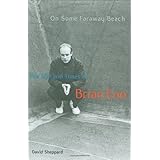
On Some Faraway Beach: The Life and Times of Brian Eno ReviewThis is the definitive biography (so far) of Brian Eno--founding member of Roxy Music, experimental musician and composer, occasional essayist/lecturer, producer, visual artist, and for some of us one of the most interesting people alive.David Sheppard begins by recounting a teenager's precocious interest in art and tape recorders, and his excited response to 1950s musical genres such as doo-wop. One of Eno's defining moments came during his late teens, dutifully recorded by Mr. Sheppard (p. 45): the mother of his then-girlfriend wondered why someone as bright as he was wanted to be an artist. He would say later: "[I]t set a question going in my mind that has always stayed with me, and motivated a lot of what I've done: what does art do for people, why do people do it, why don't we only do rational things, like design better engines? And because it came from someone I very much respected, that was the foundation of my intellectual life."
And what a life! Eno thrived at Ipswich, whose eclectic faculty was devoted to upsetting everybody's preconceptions. He became familiar with the works of John Cage, LaMonte Young, Steve Reich, Cornelius Cardew, and other leading lights of the musical avant garde. He participated in Cardew's Scratch Orchestra, this being his first appearance on vinyl. He would join Gavin Bryar's colorful Portsmouth Sinfonia, which combined virtuosos with folks who had never before touched their instrument (Eno played clarinet!!!!!). And he would encounter cutting-edge rock groups such as the Velvet Underground, whose third album he considered a masterpiece.
Sheppard recounts how Eno ended up--literally by chance--in Bryan Ferry's Roxy Music. He encountered sax/oboe player Andy Mackay on a train and learned of the band's need for someone who could record their demos. When the members of the band heard the sounds he produced on a synthesizer he found in the studio one day, they invited him to join. Sheppard does not spare us from what some would consider Eno's shadier side--his cross-dressing, for example, or his having his way with Roxy's many groupies, during a period when Eno frankly stated that his main interests were music and sex. Eventually he and Ferry butted heads, and he was out of the band. Eno had been feeling the need to stretch beyond the confines of Roxy; he had recorded tape-loop experiments with Robert Fripp (also feeling confined by the demands of being King Crimson's frontsman) that were released as No Pussyfooting.
Eno would release four albums loosely categorizable as "rock": Here Come the Warm Jets, Taking Tiger Mtn. (by Strategy), Another Green World (which many of us consider his finest achievement!), and Before and After Science. Sheppard recounts the insights, experiments, and sometimes struggles that went into these--Eno did experience periods of sleeplessness, anxiety and self-doubt, especially as he felt the pressure to duplicate the success he'd achieved with the magnificent Another Green World. But he emerged triumphant.
He recorded another Fripp collaboration (Evening Star, which I consider superior to No Pussyfooting). He produced (and performed on) ex-Velvet singer Nico's melancholy solo album The End. He worked with Fripp and Bowie on the latter's infamous trilogy (Low, Heroes and Lodger). He produced Talking Heads, eventually recording My Life in the Bush of Ghosts with David Byrne--easily the most influential release of that year (1981) with its use of samples instead of vocals and building rhythmic sound-sculptures around them. He produced Devo's quirky debut Q: Are We Not Men? A: We Are Devo! (although the results there were mixed at best). Right around this time he also became a hero to the New York City avant-punk underground by producing the controversial No New York, featuring four of that scene's most adventurous bands (The Contortions, Teenage Jesus, Mars and DNA).
Eno was nothing if not versatile. Beginning with the quiet and unobtrusive Discreet Music, Eno forged "ambient music" from its origins in avant garde composers into something almost commercially viable--Music for Airports, for example. His interest was not so much in fixed composition as in creating an environment with sound, incorporating random elements wherever possible. To enhance this process, in the mid-1970s he and artist Peter Schmidt had constructed a special deck of cards entitled Oblique Strategies. Each card bore a written instruction. When at an impasse, one could pick a card and then do what the card said. The most famous of these was, "Honor thy error as a hidden intention." Another read: "Make a list of everything you might do and then do the last thing on the list." Another: "Emphasize the flaws." Still another: "Remove specifics and convert to ambiguities."
Eno plucked other "ambient" artists from obscurity and got them on the map. Harold Budd is an example. Eno produced Budd's Plateaux of Mirror for his Obscure series which released Discreet Music and collaborated with him on The Pearl. Eno would also promote the career of avant-garde trumpet player Jon Hassell, collaborating on the latter's Fourth World Vol. One Possible Musics among others. Later Eno would produce Laurie Anderson, James, and especially (after a period of hesitation) the Irish super group U2. U2 developed a trademark depth and resonance. Eno probably deserves the credit for this. Eventually he and Bryan Ferry would mend their differences; the two would co-compose several tracks on recent Ferry solo releases.
While producing U2 and others, or collaborating with the German group Cluster (Cluster & Eno, After the Heat), Michael Brook (Hybrid), John Cale (Wrong Way Up), Jah Wobble (Spinner), or Peter Schwalm (Drawn From Life), Eno began forging his own creation: "generative music" which made use of the possibilities of computers to yield pieces that would never sound the same twice. Generative Music 1 came out of this; also The Shutov Assembly and The Drop. Eno also set up visual art installations such as I Dormienti, White Cube, The Quiet Room, and several others. The purpose of these was to create a total environment of light and sound which would enhance the viewer/listener's experience of time--by suggesting that one is experiencing only a small and temporary slice of something that had always been going on and would continue indefinitely into the future. Segments of music from each of these, and others besides, were released as a special series by Eno's company Opal. These are hard to find (I was able to purchase several on eBay for in some cases fairly hefty sums). Of course, the CDs miss an important point--it is not the music that is the star of the show but the environment which includes the music as one not quite separable component and places "equal value" on all its components. Eno overcame this limitation by releasing the entrancing 77 Million Paintings, software which when installed on your computer brings Eno's visual art directly into your study in constantly shifting, nonrepeating patterns set to "Quiet Room" generative music.
Unlike many artists Eno has always been comfortable around technology. He's a systems thinker--perhaps the only such thinker who has consciously employed systems theory to create art and music with an eye to accessibility to a large audience and acceptability within large public-access venues (airports are an example). Even early in his career, he was fascinated by the possibilities of self-regulating systems and how an experimental musical composition consisting of a few instructions could come to regulate itself given its environment (see his essay "Generating and Organizing Variety in the Arts"). Eno's recreational reading included authors such as Stafford Beer (Brain of the Firm, Designing Freedom and other books and essays which apply cybernetics to management). Eno remained fascinated with the media in which he worked. He was the first to release a CD consisting of 61 minutes of unbroken trancelike music--Thursday Afternoon. There is an accompanying video version approximately 20 minutes longer. New technology made this possible.
What emerges from David Sheppard's detailed and engaging account is a portrait of a man whose intellect engaged the world around him on multiple levels--the world of people, of music and the arts, of technology and its possibilities, and of "big ideas" of culture. "Culture," says Eno, is "everything you don't have to do"). We have to eat, so that isn't culture, it is part of being human (or, more precisely, being part of a biological system). We don't have to eat caviar, or sushi. So that's culture. At times we get the impression Brian Eno is curious about nearly everything. His diary from 1995--A Year With Swollen Appendices--is a fascinating account of his day-to-day observations, thoughts, and doings, which includes lengthy correspondences with Stewart Brand (of Whole Earth Catalog fame). Eno avoids the usual fixed premises or preconditions, but instead adopts a methodology of: "Establish your parameters, set things in motion, see what happens." His methodology avoids fixed rules but instead adopts a sense of what James P. Carse calls "infinite gamesmanship" (cf. Carse's Finite and Infinite Games). Instead of aiming for a definite outcome with winner and loser, we set about to continue the play.
Although his compositions and methods may seem whimsical, Eno clearly cares very much where this world is going; hence his participation in the West Coast based Long Now Foundation (http://www.longnow.org - see his essay "The Long Now") and his opposition to the U.S.-led war of aggression against Iraq (see articles "How to Lie About Iraq" and "The Missionary Position"). The latter culminated in one of his rare live appearances on the Stop the War Benefit Concert DVD.
There you...Read more›On Some Faraway Beach: The Life and Times of Brian Eno Overview
Want to learn more information about On Some Faraway Beach: The Life and Times of Brian Eno?
>> Click Here to See All Customer Reviews & Ratings Now

0 comments:
Post a Comment